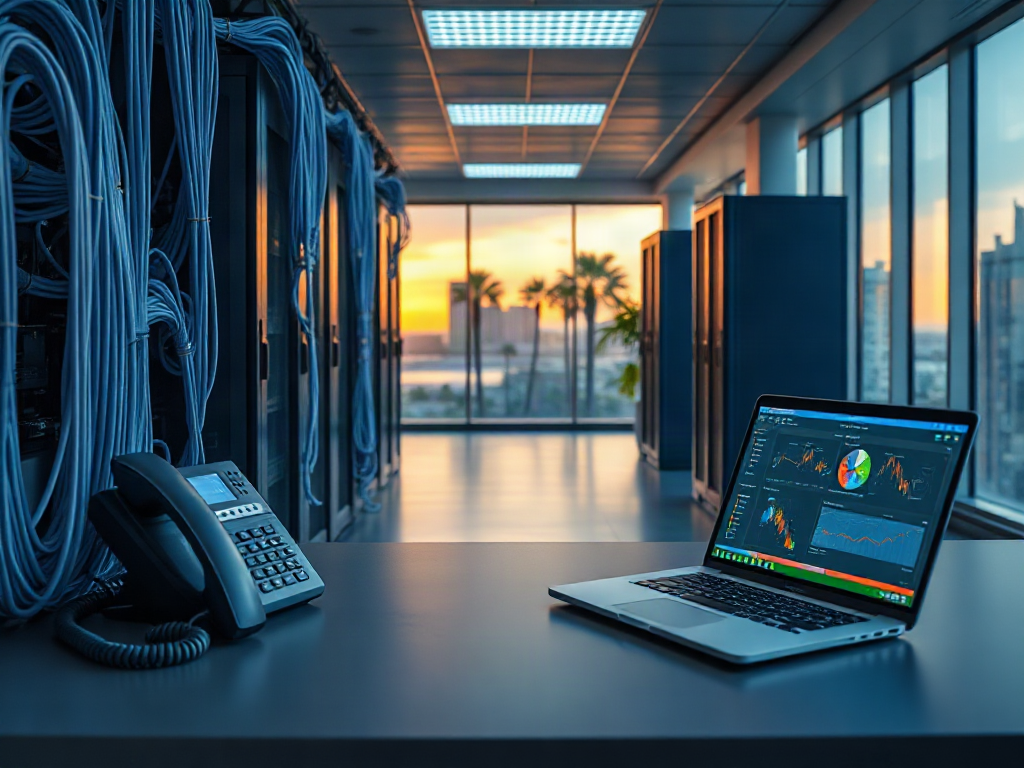
The 2026 Tampa Business Guide to VoIP and Data Cabling Integration
In the rapidly evolving business landscape of Tampa, Florida, the difference between a thriving enterprise and a struggling one often comes down to the reliability and efficiency of its underlying technology infrastructure. As we move through 2026, the convergence of voice and data is no longer a luxury—it is the fundamental backbone of modern commerce. For businesses in the Tampa Bay area, from the corporate towers of Downtown Tampa to the industrial hubs of Brandon and Clearwater, integrating Voice over Internet Protocol (VoIP) with a robust data cabling infrastructure is the single most effective way to ensure seamless communication, operational scalability, and long-term resilience.
This guide is designed to provide Tampa business leaders with a comprehensive understanding of why the physical layer of your network (cabling) is just as critical as the software layer (VoIP). We will explore the technical nuances, the specific environmental challenges of the Tampa region, and the strategic advantages of a unified approach to business communications. Whether you operate a medical office in South Tampa, a law firm in Westshore, or a restaurant in Ybor City, understanding the symbiotic relationship between your cables and your cloud communications is essential for 2026 and beyond.
The Evolution of Tampa Business Communications
For decades, businesses in Florida relied on traditional analog phone lines and separate coaxial cables for internet access. These systems were distinct, expensive to maintain, and limited in their capabilities. As we settled into the mid-2020s, the shift toward unified communications became absolute. Tampa businesses are increasingly migrating to Cloud PBX systems and SIP trunking to leverage the flexibility of the internet for voice transmission.
However, this migration introduces a critical dependency: your voice quality is now inextricably linked to your data network's health. If your cabling infrastructure is outdated or poorly maintained, your digital calls will suffer from jitter, latency, and packet loss. In 2026, the modern Tampa office requires a network that prioritizes voice traffic without compromising data speed. This is where the concept of integration becomes vital. It is not enough to simply plug a VoIP phone into an existing port; the entire ecosystem—from the switch to the server—must be optimized for real-time communication.
Why Data Cabling is the Foundation of VoIP Performance
Many business owners focus on the visible aspects of their technology, such as the handsets on their desks or the software on their screens. However, the invisible infrastructure—the structured cabling—dictates the limits of what that technology can achieve. Voice and data cabling serves as the highways upon which your digital information travels.
Bandwidth and Throughput Requirements
In 2026, the standard for business cabling has shifted. While Cat5e was once sufficient, modern VoIP deployments and high-definition video conferencing demand the higher bandwidth capabilities of Cat6 and Cat6a cabling. These cables support higher frequencies and reduce crosstalk, ensuring that a large file upload by your sales team does not interrupt a critical client call by your executive team. Proper cabling minimizes the resistance that leads to data bottlenecks, ensuring that your managed IT services provider can guarantee the uptime your business requires.
Power over Ethernet (PoE) Capabilities
One of the most significant advantages of modern cabling integration is the ability to transmit power and data simultaneously. Power over Ethernet (PoE) technology allows your network switches to power VoIP phones, wireless access points, and even video surveillance cameras through a single Ethernet cable. This reduces the need for separate electrical outlets near every device, simplifying installation and reducing clutter. However, this requires high-quality cabling that can handle the heat and electrical load without degrading signal integrity.
Structured Cabling Best Practices for Tampa Facilities
Tampa presents a unique set of environmental challenges for technology infrastructure. The high humidity, intense heat, and frequent storm activity during hurricane season can wreak havoc on poorly installed network components. Therefore, adhering to strict installation standards is paramount.
A professional structured cabling installation involves much more than running wires under carpets. It requires a strategic design that accounts for cable management, airflow, and future expansion. Here are key elements of a robust cabling strategy:
- Cable Management: Utilizing vertical and horizontal cable managers, velcro ties (instead of zip ties), and proper labeling to prevent tangling and simplify troubleshooting.
- Pathway Design: Ensuring that cables are routed away from fluorescent lighting and other sources of electromagnetic interference (EMI) which can degrade voice quality.
- Redundancy: Implementing redundant pathways so that if one cable or switch fails, the network can automatically reroute traffic, keeping your business operational.
- Testing and Certification: Every cable run must be tested for performance standards to ensure it can handle the intended traffic load before being put into service.
By investing in a high-quality physical layer, Tampa businesses can extend the lifecycle of their network hardware and ensure that their VoIP investments yield the highest possible return. This proactive approach is a hallmark of IT services that prioritize long-term stability over quick fixes.
Integrating VoIP with Cloud Services and Remote Work
The modern Tampa workforce is no longer confined to a single office. The rise of hybrid work models means that employees need to access voice and data systems from home offices in Lutz, coffee shops in Seminole Heights, or while traveling. Integrating VoIP with cloud services allows for a seamless transition between devices and locations.
When a business integrates its VoIP system with a cloud-based infrastructure, the office phone becomes a software application. This allows for "hot-desking," where employees can log into any physical phone in the office and have their personal extension and settings populate instantly. More importantly, it allows remote workers to use softphones on their laptops or mobile devices, making and receiving calls from their business numbers without being tethered to a physical desk.
However, this flexibility places a heavy burden on the network. Remote workers must have secure, reliable connections to the corporate VPN. This is where the integration of cybersecurity and voice data becomes critical. Without proper encryption and network segmentation, voice traffic can be a vulnerable entry point for malicious actors. A comprehensive Cloud PBX strategy includes end-to-end encryption and robust firewall management to protect sensitive conversations.
Industry-Specific Needs in the Tampa Bay Area
The Tampa Bay area is home to a diverse economy, and the requirements for VoIP and cabling integration vary significantly by industry. A one-size-fits-all approach does not work in a region with such a dynamic business mix.
Medical Offices and Healthcare
For medical offices, communication is a matter of patient safety and compliance. VoIP systems must support clear voice quality for telehealth consultations and ensure that patient data transmitted alongside voice is secure. Medical office cybersecurity is non-negotiable, and the underlying cabling must support bandwidth-intensive imaging equipment and electronic health records (EHR) systems without latency.
Law Offices and Financial Services
Law offices and banking and finance institutions require strict confidentiality. The integration of voice and data must prioritize encryption and call recording features for compliance. A Tampa law office IT support strategy often includes segmented networks where voice traffic travels on a separate VLAN (Virtual Local Area Network) from general web browsing to prevent data leakage.
Restaurants and Hospitality
In the bustling hospitality scene of Tampa, from food trucks to fine dining, connectivity drives sales. Restaurants and food trucks rely on VoIP for reservation systems and point-of-sale (POS) transactions. Reliable data cabling ensures that these systems communicate effectively, even during peak hours. A Tampa restaurant IT support plan often focuses on ruggedized cabling solutions and failover internet connections to keep operations running smoothly.
Corporate Offices and Call Centers
For corporate offices and call centers, uptime is revenue. Call centers in the area require high-density cabling solutions and power redundancy. The integration of VoIP allows for advanced features like skills-based routing and interactive voice response (IVR), but these features require a network backbone that can handle high concurrent call volumes. A call center IT infrastructure upgrade typically involves upgrading to fiber-optic backbones and Cat6a cabling to the desk.
The Importance of Business Continuity and Backup
In Florida, we are acutely aware of the threats posed by natural disasters. A hurricane or severe tropical storm can knock out power and internet connectivity for days. For this reason, the integration of VoIP and data cabling must include a robust data backup and recovery strategy.
Modern VoIP systems offer significant advantages over traditional analog lines during emergencies. If the physical office is inaccessible, calls can be automatically forwarded to mobile devices or a remote location. However, this requires that your data infrastructure—including your configuration settings and call logs—is backed up securely in the cloud.
Furthermore, the physical cabling should be protected against water damage and power surges. Implementing data backup and recovery strategies ensures that even if hardware is destroyed, the business logic and communication capabilities can be restored quickly, minimizing downtime and revenue loss.
Scalability for Growing Tampa Businesses
As Tampa continues to grow as a major economic hub, local businesses must plan for expansion. A startup in a home office in Carrollwood may eventually grow into a large corporate presence in Tampa or Clearwater. The infrastructure you install today should not become a bottleneck for the growth you achieve tomorrow.
Scalability is a primary benefit of integrating VoIP with structured cabling. Adding a new employee to a traditional phone system often required a technician to physically wire a new line, a process that could take days. With VoIP and a well-designed cabling infrastructure, adding a new user is often as simple as plugging a phone into an existing network port and configuring the software.
This agility allows businesses to adapt to market changes rapidly. Whether you are expanding to a new location in Brandon or St. Petersburg or simply adding seasonal staff, the integration of voice and data makes the process seamless. It allows for a "plug-and-play" environment where the physical location of an employee becomes less relevant than their connection to the network.
The Role of Managed IT Services in Integration
The complexity of managing a converged voice and data network is significant. It requires specialized knowledge of networking protocols, cabling standards, and VoIP software. For most small and mid-sized businesses in Tampa, attempting to manage this in-house is not feasible.
Partnering with a managed IT services provider ensures that your integration is handled by experts. This includes:
- Network Assessment: Evaluating current cabling and bandwidth to determine readiness for VoIP.
- Design and Implementation: Creating a customized integration plan that aligns with business goals.
- Proactive Monitoring: Using advanced tools to monitor network traffic and identify potential issues before they impact users.
- Management and Maintenance: Handling updates, security patches, and troubleshooting for both voice and data systems.
By outsourcing these complexities, Tampa businesses can focus on their core operations while ensuring their communication infrastructure is reliable, secure, and future-proof. This is particularly important for industries like industries such as healthcare and finance, where downtime is not an option.
Future Trends: AI and Unified Communications
Looking ahead to the rest of 2026 and into 2027, the integration of Artificial Intelligence (AI) into VoIP systems is expected to accelerate. AI-powered analytics can transcribe calls, analyze sentiment, and provide real-time coaching to sales and support teams. However, these advanced features require vast amounts of data processing power and high-speed connectivity.
Without a robust data cabling infrastructure, businesses will be unable to leverage these AI advancements. The data collected by AI tools travels through the same cables as your voice calls. High-quality structured cabling ensures that this data is transmitted without corruption or delay, providing the accurate insights needed to drive business strategy.
Furthermore, we are seeing a move toward "smart buildings" in the Tampa commercial real estate market. These buildings integrate environmental controls, security, and communications into a single IP-based network. The integration of VoIP and data cabling is the first step toward participating in this connected ecosystem.
Ensuring Security at the Physical Layer
While much focus is placed on software firewalls and antivirus protection, the physical security of your data cabling is equally important. In shared office spaces or public areas, unsecured network jacks can allow unauthorized individuals to plug in and access the network.
Proper integration involves securing network switches in locked closets and disabling unused ports. Additionally, using fiber optic cabling for backbone connections between floors or buildings provides a higher level of security, as it is extremely difficult to tap into without detection. A comprehensive cybersecurity posture includes physical security measures alongside digital ones.
Conclusion
For businesses in Tampa, Florida, the integration of VoIP and data cabling is more than just a technical upgrade; it is a strategic business decision. It allows for greater flexibility, reduces operational costs, and provides the platform needed to adopt future technologies. As we navigate 2026, the reliability of your communication network will define your ability to compete in a global market.
Investing in high-quality cabling and a modern VoIP system ensures that your team can communicate clearly and efficiently, whether they are in the office, at home, or on the road. It requires a careful assessment of your current infrastructure and a vision for future growth. To ensure your business is ready for the demands of the modern digital landscape, contact TeamLogic IT Tampa for expert guidance and support. You can explore our comprehensive services and schedule a consultation by visiting us at https://www.tampatechsupportfl.com. Let us help you build a connected, secure, and successful future.