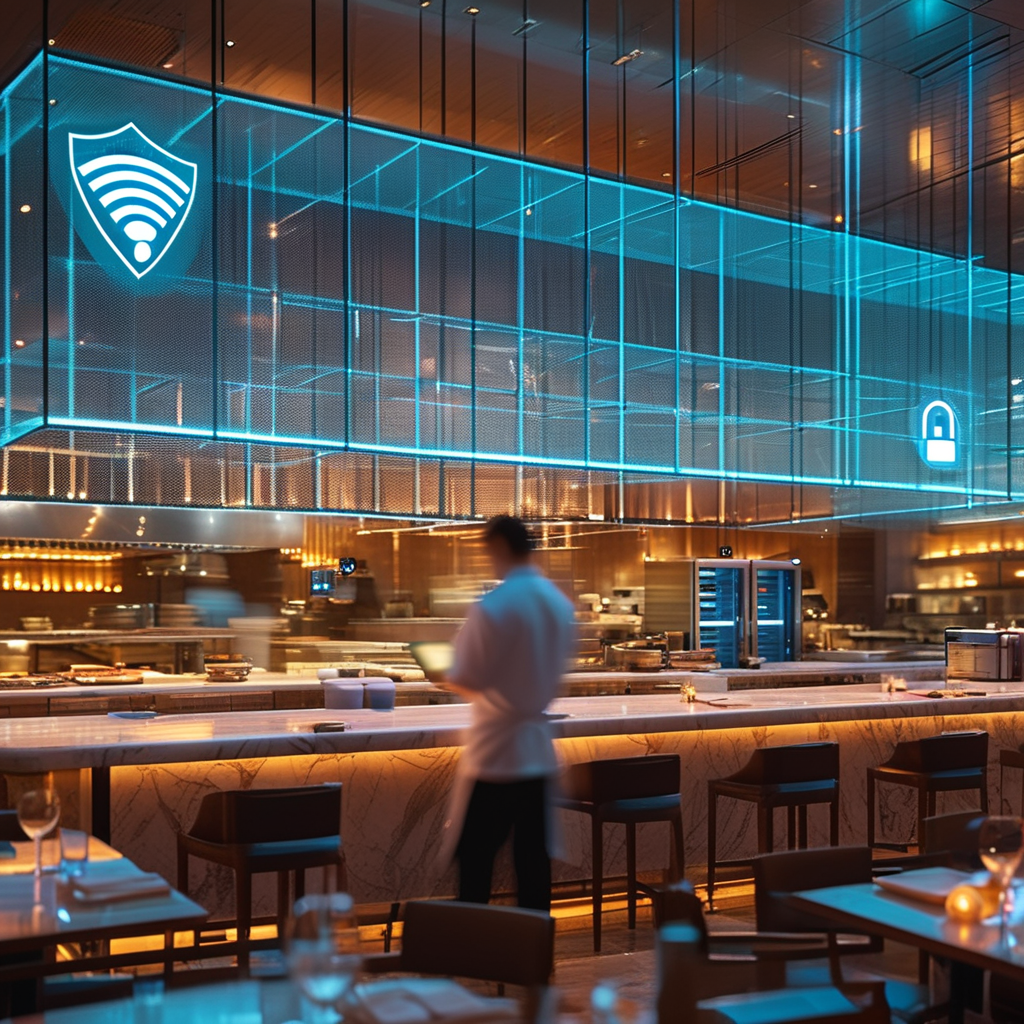
Tampa Restaurant IT Support and Network Security Guide
Running a restaurant in Tampa is a high-stakes balancing act. You are juggling front-of-house hospitality, back-of-house inventory, kitchen speed, and customer experience, all while keeping profit margins healthy. In 2025, there is another ingredient that determines success or failure: technology. Your point-of-sale (POS) system, online ordering platform, reservation software, digital menu boards, Wi-Fi for guests, and even your refrigeration monitoring all depend on a stable, secure network. When that network fails, you lose revenue. When it is breached, you lose trust and possibly your business. This guide is designed specifically for Tampa restaurant owners and operators who need practical, authoritative advice on IT support and network security. We will cover the unique challenges facing the food service industry, the critical components of a resilient IT infrastructure, and how partnering with a local managed IT services provider like TeamLogic IT Tampa can protect your establishment around the clock.
Why Restaurants Are Prime Targets for Cyberattacks
Many restaurant owners believe cybercriminals only go after large corporations or financial institutions. This is a dangerous misconception. In reality, restaurants are attractive targets precisely because they are small and medium-sized businesses with limited IT resources. Attackers know you are busy, understaffed in technology, and often running outdated systems. They also know that you process thousands of credit card transactions daily, hold customer data, and may not have robust security layers in place. According to industry reports, the hospitality sector experiences a significant percentage of data breaches, and the average cost of a breach for a small business can be devastating, often exceeding six figures when you factor in fines, legal fees, lost business, and remediation costs.
Beyond financial theft, a cyberattack can shut down your operations completely. Imagine a ransomware attack locking your POS system on a busy Saturday night. You cannot take orders, process payments, or even access your inventory database. Your staff is standing idle, customers are leaving frustrated, and your reputation takes a massive hit. This is not a hypothetical scenario. It happens to restaurants across Florida every year. The good news is that most of these attacks are preventable with the right proactive measures and professional IT support.
Your restaurant also handles more than credit card data. You collect employee information, including social security numbers and bank details for payroll. You may store customer names, phone numbers, email addresses, and even loyalty program data. All of this is valuable on the dark web. A data breach not only triggers compliance penalties under standards like the Payment Card Industry Data Security Standard (PCI DSS) but also violates customer trust, which is nearly impossible to rebuild in a competitive market like Tampa’s dining scene.
The Unique IT Challenges Facing Tampa Restaurants
Tampa’s culinary landscape is diverse, ranging from casual food trucks and beachside cafes to upscale waterfront dining and bustling Ybor City establishments. While each type of restaurant has different operational needs, they all share core IT challenges that must be addressed.
Outdated and Fragmented Technology
Many restaurants operate with aging POS terminals, separate printers, cash drawers, and external payment devices that are not integrated. This fragmentation creates inefficiencies and, more critically, security gaps. Old operating systems, such as Windows 7 or legacy POS software, no longer receive security updates, leaving your network wide open to exploits. Additionally, restaurant owners often add new technology piecemeal—a new tablet for reservations, a separate app for delivery, a guest Wi-Fi router—without considering how these devices interact or what vulnerabilities they introduce.
High Employee Turnover and Insider Risks
The restaurant industry suffers from high turnover rates. You are constantly hiring new servers, bartenders, and kitchen staff. Each new employee needs access to the POS, scheduling systems, and potentially email. Without a robust onboarding and offboarding process, former employees may retain access to sensitive systems. Even current employees can unintentionally cause damage by clicking on a phishing email or using weak, reused passwords. Insider threats, whether accidental or malicious, are a leading cause of data breaches in hospitality.
Guest Wi-Fi and Network Segmentation
Offering free Wi-Fi to customers is almost mandatory in Tampa, especially for a younger demographic. However, if your guest network is not properly segmented from your internal business network (POS, back-office computers, cameras), you are inviting disaster. A customer connecting to your Wi-Fi could inadvertently access your internal systems if the network is flat and unsegmented. Proper network segmentation isolates guest traffic from sensitive data, ensuring that even if a customer device is compromised, it cannot reach your POS or back-office servers.
Downtime Is Directly Tied to Lost Revenue
Unlike an office where a few hours of email downtime is inconvenient, a restaurant cannot operate without its technology. Your POS is your cash register, order taker, and inventory tracker. If the internet goes down or your server crashes, you are effectively blind. Orders cannot be sent to the kitchen, credit cards cannot be processed, and online delivery integrations are interrupted. Every minute of downtime costs you money—not just in lost sales but in staff wages paid while they stand idle. A professional managed IT provider ensures you have redundant internet connections, backup systems, and proactive monitoring to minimize any potential disruption.
Core Components of a Secure Restaurant IT Infrastructure
Building a resilient and secure IT environment for your restaurant does not happen by accident. It requires a deliberate approach covering several key areas. Below we break down what you should be discussing with your IT partner.
Secure Point-of-Sale (POS) Systems
Your POS is the heart of your operation. It must be protected at all costs. This includes ensuring the operating system is fully patched, the POS software is updated to the latest version, and that remote access to the POS is restricted and encrypted. You should also use strong, unique passwords for any admin accounts and enforce multi-factor authentication (MFA) for all users, even for basic login functions where feasible. Your IT provider should conduct regular scans of your POS environment to detect any signs of malware, particularly memory-scraping software that steals card data at the point of transaction.
Next-Generation Firewalls and Network Segmentation
A traditional router from your internet service provider is not sufficient for a business environment. You need a next-generation firewall (NGFW) that includes intrusion prevention, application control, and advanced threat detection. This firewall should be configured to create separate VLANs (Virtual Local Area Networks) for different purposes: one for your POS and payment systems, one for your back-office computers, one for your guest Wi-Fi, and one for your security cameras and IoT devices like smart thermostats or refrigeration sensors. This segmentation ensures that if one network is compromised, the attacker cannot easily pivot to your payment systems.
Endpoint Protection and Patch Management
Every computer, tablet, and smartphone that touches your network is an endpoint. Each one needs advanced antivirus and anti-malware protection that goes beyond simple signature-based scanning. Modern endpoint detection and response (EDR) tools use behavioral analysis to identify suspicious activity in real time. Additionally, patch management is non-negotiable. Your IT provider should automate the installation of security updates across all devices, ensuring that new vulnerabilities are remediated quickly. Left unpatched, systems become easy targets for known exploits.
Data Backup and Disaster Recovery
You cannot afford to lose your business data. This includes your menu configuration, inventory levels, employee schedules, sales history, and customer reservations. A robust backup strategy follows the 3-2-1 rule: three copies of your data, on two different types of media, with one copy stored offsite (ideally in a cloud environment). However, backups alone are not enough. You need a disaster recovery plan that outlines exactly how you will restore operations in the event of a ransomware attack, a fire, or even a hurricane. Tampa is no stranger to severe weather, and the ability to spin up a backup server in the cloud or access your data from a remote location can be the difference between reopening in days versus weeks. TeamLogic IT Tampa specializes in data backup and recovery solutions tailored for the food service industry.
Secure Business Communications
Your restaurant relies on phones for reservations, order pickups, and internal communication between the front and back of house. Traditional phone lines are becoming obsolete. Voice over IP (VoIP) systems offer flexibility and advanced features, but they also require proper security configurations. Unsecured VoIP systems can be hacked, leading to toll fraud and expensive unauthorized calls. If you are using a cloud-based phone system, you need a provider that encrypts voice traffic and secures your session initiation protocol (SIP) trunking. For Tampa restaurants, this means ensuring your communication infrastructure is just as protected as your payment infrastructure. Explore data, voice, and VoIP solutions that are designed with security in mind.
Network Security Best Practices for Restaurant Management
While your IT partner handles the technical heavy lifting, there are daily practices your management team and staff must follow to maintain security.
Implement Strict Access Controls
Not every employee needs access to every system. Use role-based access control to limit what each staff member can see and do on the POS and back-office systems. For example, a server may only need access to the order entry screen, while a shift manager can void transactions and run reports, and only the general manager or owner can change pricing or access payroll data. Review user accounts quarterly and immediately disable accounts for terminated employees. Also, ensure that shared logins are never used, as they destroy accountability and make it impossible to trace a breach back to a specific individual.
Enforce Strong Password Policies and Multi-Factor Authentication
Weak passwords are the simplest way for attackers to gain access. Enforce a policy that requires passwords to be at least 12 characters long, with a mix of uppercase, lowercase, numbers, and symbols. Better yet, use passphrases. Additionally, require multi-factor authentication (MFA) for any remote access to your network, including your POS vendor portal, email accounts, and any administrative tools. MFA dramatically reduces the risk of credential theft because even if a password is compromised, the attacker cannot log in without the second verification step. Train your managers on why MFA is critical—do not let them see it as an inconvenience.
Regular Security Awareness Training for Staff
Your employees are your first line of defense. The most sophisticated security software cannot stop a staff member from typing their password into a fake login page. Conduct regular, brief training sessions on recognizing phishing emails, suspicious links, and phone scams. Teach them never to share passwords, to verify any request for sensitive information over the phone, and to report any unusual computer or POS behavior immediately. This is not a one-time event. Reinforce the training monthly and test employees with simulated phishing campaigns. Your managed IT provider can assist in setting up these training and testing programs.
Secure Physical Devices
Physical security is often overlooked. Your POS terminals, back-office computers, and network equipment should be in secure locations, away from public access. Never leave a terminal logged in and unattended. Invest in cable locks for portable devices and ensure that the server room or network closet is locked at all times. Also, consider using video surveillance to monitor areas where sensitive equipment is located, but be sure to separate those camera networks from your guest Wi-Fi and POS systems.
Compliance Requirements for Tampa Restaurants
If you accept credit cards—which all restaurants do—you must comply with the Payment Card Industry Data Security Standard (PCI DSS). This is not optional. The standard is enforced by major credit card brands, and noncompliance can result in hefty fines, increased transaction fees, or even the loss of your ability to accept credit cards. PCI DSS compliance is a multifaceted requirement that includes maintaining a secure network, protecting cardholder data, implementing strong access control measures, regularly monitoring and testing networks, and maintaining an information security policy.
Many restaurant owners mistakenly think that using a third-party processor for payments absolves them of compliance responsibilities. This is false. Even with an external processor, your network and your devices handle card data before it is transmitted. You are responsible for the security of that handling. A managed IT services provider with expertise in cybersecurity can help you navigate the complexities of PCI DSS, conduct quarterly scans, fill out self-assessment questionnaires, and implement the required safeguards. Furthermore, Tampa restaurants may also need to comply with Florida’s data protection laws, which mandate reasonable security measures for personal information and require notification to affected individuals in the event of a breach.
The Role of Managed IT Services for Restaurants
Your restaurant’s IT needs are unique. You need someone who understands the urgency of real-time support during dinner rush. You need a partner who can proactively monitor your network before small issues become catastrophic outages. You need local expertise that is familiar with Tampa’s business environment and the specific challenges of the hospitality industry. This is exactly what managed IT services from TeamLogic IT Tampa provide.
Proactive Monitoring and Maintenance
Rather than waiting for something to break, managed IT services involve continuous monitoring of your servers, network devices, and endpoints. This proactive approach identifies anomalies, such as unusual data traffic, failing hard drives, or outdated patches, and resolves them before they impact your operations. You receive fewer disruptions and longer equipment lifespans. For a restaurant, this means your POS is always ready when the lunch crowd hits.
Rapid On-Site Response in Tampa
When you do experience an issue, you cannot afford to wait hours for a remote technician in another state. TeamLogic IT Tampa provides local, on-site support across the greater Tampa Bay area. Whether you are in South Tampa, Ybor City, Westshore, or Clearwater, a technician can be dispatched quickly to resolve hardware failures, network outages, or connectivity issues. This rapid response minimizes downtime and gets you back to serving customers.
Security-First Approach
Your managed IT provider should prioritize security in every aspect of your infrastructure. This includes deploying advanced firewalls, endpoint protection, email filtering, and regular vulnerability assessments. They should also handle your cloud services securely, ensuring that any remote access to your data is encrypted and authenticated. With a security-first mindset, you reduce the risk of a costly breach and protect your restaurant’s reputation.
Unified Communications and Cloud Integration
Many Tampa restaurants have moved to cloud-based solutions for reservations, delivery management, and employee scheduling. A managed service provider can integrate these disparate cloud tools into a cohesive system, ensuring data flows securely between platforms. They also manage your phone systems, whether you use cloud PBX or a traditional on-premises setup, and handle the underlying cabling and network connectivity required for reliable voice and data transmission. For a growing restaurant group, this scalability is essential.
Business Continuity Planning
Disasters happen. Hurricanes, fires, floods, and even extended power outages can disrupt your operations. Managed IT services include business continuity planning, which goes beyond backups. You will have a documented plan for how to continue operations from a temporary location, how to access critical data remotely, and how to restore full functionality after an event. This planning gives you peace of mind and ensures you can reopen quickly, preserving your customer base and revenue stream.
How to Choose the Right IT Partner for Your Restaurant
Not all IT support companies are created equal. When evaluating a partner for your Tampa restaurant, consider the following questions.
- Do they have specific experience working with restaurants or the hospitality industry?
- Are their response times guaranteed and backed by a service level agreement (SLA)?
- Can they provide local on-site support, or are they strictly remote?
- Do they offer a comprehensive security suite, including firewall management, endpoint protection, and security awareness training?
- Are they compliant with PCI DSS requirements and can they help you achieve and maintain compliance?
- Do they understand the importance of network segmentation between guest Wi-Fi and POS systems?
- Can they provide references from other Tampa Bay businesses, ideally similar in size and scope to yours?
Take your time with this decision. Your IT provider will be a trusted partner who has access to your most sensitive business data. You need someone who is responsive, transparent, and proactive, not just a break-fix technician who only calls when something breaks.
The Future of Restaurant Technology in Tampa
Looking ahead, technology will only become more integral to restaurant operations. We are seeing a rise in self-ordering kiosks, contactless payments, AI-driven inventory management, and even robotic kitchen assistants. All of these innovations rely on a secure and robust network backbone. Additionally, with the increasing threat of cyberattacks on the food supply chain, restaurant owners must remain vigilant. Staying ahead of threats requires continuous education and investment in up-to-date security tools. By partnering with a forward-thinking IT provider, your restaurant can adopt new technologies with confidence, knowing that your infrastructure is protected and scalable.
Moreover, Tampa’s vibrant tourism industry means your restaurant may see a surge of visitors using mobile devices for everything from checking your menu online to paying via digital wallets. Your guest Wi-Fi needs to handle high bandwidth demand securely. Your online ordering system must integrated seamlessly with your POS to avoid double entries. Your loyalty program data must be encrypted to protect customer privacy. These are not afterthoughts—they are core components of a modern dining experience. An expert IT partner ensures that all these pieces work together harmoniously.
Conclusion: Protect Your Restaurant’s Future with TeamLogic IT Tampa
Your restaurant is your passion and your life’s work. You should not have to spend your nights worrying about whether your network is secure or if your data is backed up. By taking a proactive approach to IT support and network security, you protect your revenue, your reputation, and your peace of mind. The complexity of modern cybersecurity demands professional expertise. Attempting to manage it alone or relying on a generalist technician who does not understand the restaurant environment is a risk you cannot afford.
TeamLogic IT Tampa is a leading provider of managed IT services and IT support for businesses across the Tampa Bay area. With a local team that understands the unique needs of the hospitality industry, we offer fast response times, proactive monitoring, and security-focused solutions tailored to your restaurant’s size and budget. From securing your POS system and segmenting your network to implementing robust backup and disaster recovery plans, we handle every aspect of your technology infrastructure. We serve restaurants in Tampa, Clearwater, St. Petersburg, Brandon, Riverview, and all surrounding communities. Our expertise is backed by industry best practices and a commitment to excellence.
Do not wait until a cyberattack or system failure puts your restaurant out of business. Take control of your technology today by partnering with a trusted local advisor. For comprehensive managed IT services, cybersecurity, data backup and recovery, and reliable help desk support, contact TeamLogic IT Tampa. Visit our website at https://www.tampatechsupportfl.com to learn more about how we can help your restaurant thrive in a digital-first world. Whether you need assistance with your current infrastructure, want to upgrade to a more secure cloud environment, or require immediate on-site support, our team is ready to serve you. Call us today to schedule a free consultation and see how we can transform your IT from a hidden liability into a strategic asset for your Tampa restaurant.