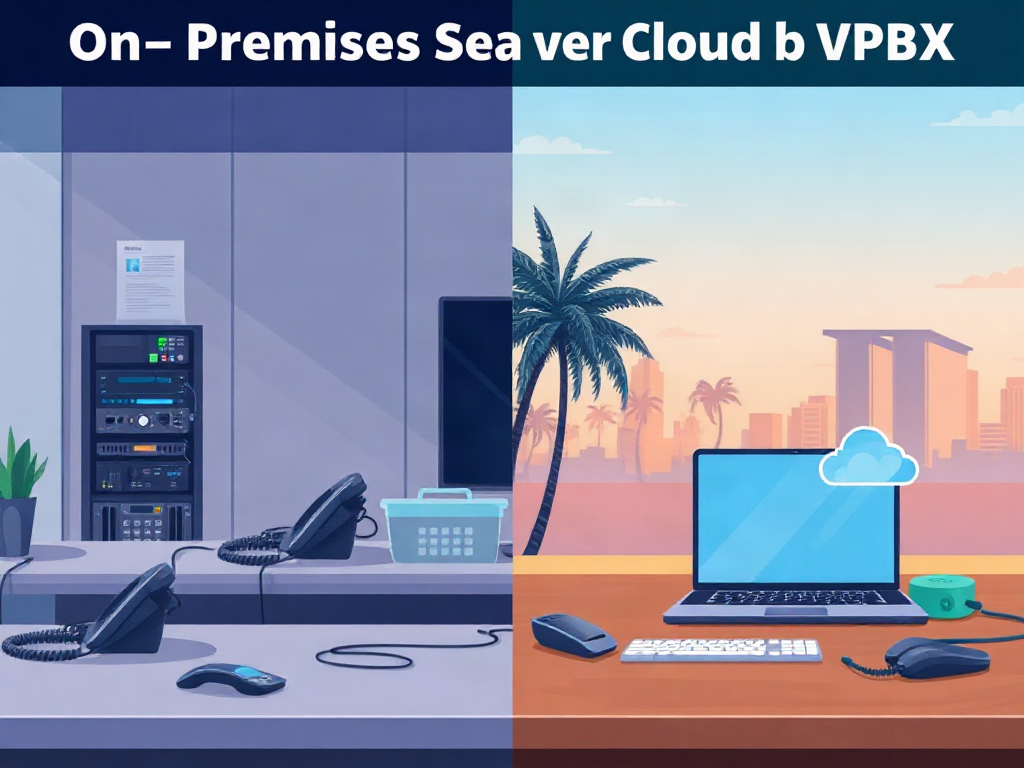
On Premises Phone Systems vs Cloud PBX for Tampa Businesses
Communication is the backbone of every successful business. Whether you operate a small law office in downtown Tampa, a busy medical practice in Westshore, or a growing call center in Brandon, your phone system directly impacts how you serve customers, coordinate teams, and present your brand to the world. In recent years, Tampa businesses have faced a critical decision: should they invest in a traditional on premises phone system or move to a cloud based PBX solution? Both approaches have distinct strengths, and the right choice depends on your operational needs, growth plans, and how your team works day to day.
At TeamLogic IT Tampa, we help organizations across the Tampa Bay area evaluate, deploy, and manage phone and communication systems that align with their business goals. This article breaks down the differences between on premises phone systems and cloud PBX, explores the advantages and tradeoffs of each, and offers guidance on how to choose the best fit for your Tampa business.
Understanding On Premises Phone Systems
An on premises phone system, sometimes called a PBX (Private Branch Exchange), is a traditional model where the hardware and software that run your phone network live physically inside your office. The core system, often housed in a server room or equipment closet, connects your internal extensions, manages incoming and outgoing calls, and interfaces with your telephone service provider.
For decades, on premises systems were the standard for businesses of all sizes. They rely on physical infrastructure such as control units, phone lines, and handset wiring, and they are managed and maintained by an internal IT team or an external technology partner like TeamLogic IT Tampa's on premises phone systems team.
Key Characteristics of On Premises Systems
- Hardware and software reside at your physical business location.
- Requires dedicated space, power, and cooling for equipment.
- Maintenance, upgrades, and repairs are handled on site.
- Typically uses traditional phone lines, though many support SIP trunking for digital connectivity.
- Offers a high degree of control over configuration and security.
Advantages of On Premises Phone Systems
On premises systems continue to appeal to certain Tampa businesses for good reason. They offer a level of control and predictability that some organizations find essential.
- Full control over infrastructure: Your team or IT partner manages every aspect of the system, from call routing to security settings.
- Predictable performance: Because the system is on site, call quality does not depend on your internet connection for internal communication.
- Customization: On premises systems can be tailored extensively to meet unique workflows, especially in industries like medical offices and law offices that have specific compliance and confidentiality requirements.
- Independence from internet outages: Internal calls and certain functions can continue even if your internet service is disrupted.
- Long lifespan: With proper maintenance, an on premises system can serve a business for many years.
Challenges of On Premises Phone Systems
Despite their strengths, on premises systems come with limitations that have led many Tampa businesses to reconsider their approach.
- Upfront investment: Purchasing hardware, licensing, and installation requires significant capital.
- Maintenance burden: Ongoing support, repairs, and upgrades demand time and expertise.
- Scalability constraints: Adding new lines or locations often requires additional hardware and on site work.
- Limited remote capabilities: Supporting remote workers or multiple locations can be complex and costly.
- Physical risk: Equipment is vulnerable to power failures, flooding, and other local disruptions common during Tampa's storm season.
Understanding Cloud PBX
A cloud PBX, also known as a hosted PBX or cloud phone system, moves the core phone system infrastructure to secure data centers managed by a service provider. Instead of housing equipment in your office, your phone system is delivered as a service over the internet. Employees can use desk phones, softphones, or mobile apps to make and receive calls from virtually anywhere.
Cloud PBX has gained tremendous traction among Tampa businesses, particularly those with remote teams, multiple locations, or a desire to reduce on site hardware. Providers like TeamLogic IT Tampa's cloud PBX solutions deliver enterprise grade calling features without the burden of maintaining physical equipment.
Key Characteristics of Cloud PBX
- Hosted and managed by a service provider in secure data centers.
- Requires a reliable internet connection for operation.
- Scalable quickly to accommodate growth or seasonal changes.
- Supports remote and mobile workforces natively.
- Typically billed as an ongoing subscription.
Advantages of Cloud PBX
Cloud PBX offers flexibility and modern features that align well with how Tampa businesses operate today.
- Lower upfront costs: No major hardware purchase is required, reducing capital expenditure.
- Scalability: Add or remove users and features quickly as your business evolves.
- Remote and mobile support: Employees can work from home, in the field, or across multiple offices with consistent access.
- Automatic updates: The provider handles maintenance, security patches, and feature upgrades.
- Business continuity: If your office loses power or internet, calls can often be rerouted to mobile devices or alternate locations, which is critical for disaster recovery planning.
- Advanced features: Voicemail to email, call analytics, video conferencing integration, and CRM connectivity are often included.
Challenges of Cloud PBX
Cloud PBX is not without its considerations. Businesses must evaluate their network infrastructure and connectivity to ensure a smooth experience.
- Dependence on internet quality: Poor bandwidth or unstable connections can affect call quality.
- Ongoing subscription costs: While upfront costs are lower, expenses continue month after month.
- Less direct control: Configuration and troubleshooting often depend on the provider.
- Data security considerations: Ensuring your provider meets your security and compliance standards is essential.
How Tampa's Business Environment Influences the Decision
Tampa is a dynamic market with a diverse business landscape. From financial institutions in banking and finance to restaurants and food trucks, corporate offices, and home based businesses, the communication needs vary widely. Understanding local factors can help shape the right decision.
Weather and Business Continuity
Tampa is no stranger to hurricanes and severe storms. Business continuity is a top concern for local organizations. Cloud PBX offers a significant advantage here, because calls can be automatically redirected when a physical office is inaccessible. On premises systems can also be protected with backup power and redundancy, but they require deliberate planning and investment to achieve the same resilience.
Remote and Hybrid Work
The rise of remote work has transformed how Tampa businesses staff their operations. Companies with remote workers often find that cloud PBX provides a more seamless experience, allowing team members to stay connected using the same business number regardless of location. On premises systems can support remote workers through VPNs and softphones, but the setup is typically more complex.
Industry Specific Requirements
Certain industries have unique needs. Medical offices must consider patient privacy and compliance. Law offices prioritize confidentiality and detailed call records. Call centers and help desks demand robust call routing, analytics, and scalability. In each case, the choice between on premises and cloud PBX should reflect the specific compliance, security, and performance requirements of the industry.
Factors to Consider When Choosing
There is no universal answer to the on premises versus cloud PBX question. The right choice depends on your organization's priorities. Here are key factors Tampa businesses should weigh.
Scalability and Growth Plans
If you anticipate rapid growth, seasonal fluctuations, or the addition of new locations, cloud PBX offers greater flexibility. On premises systems can scale, but each expansion typically involves hardware purchases and on site installation.
Budget Structure
While this article avoids specific pricing, it is important to consider how you prefer to spend. On premises systems generally involve higher upfront capital costs with lower ongoing expenses. Cloud PBX shifts costs to a predictable operational expense model. The right fit depends on your financial strategy and cash flow preferences.
IT Resources and Expertise
On premises systems require ongoing maintenance and support. If your internal IT team is lean, or if you rely on a managed IT services provider, cloud PBX can reduce the burden on your staff. Cloud systems offload much of the maintenance to the provider, freeing your team to focus on other priorities.
Security and Compliance
Security is a top concern for every business. On premises systems give you direct control over physical and network security, which some organizations prefer. Cloud PBX providers invest heavily in security, but you must ensure their practices align with your compliance obligations. Partnering with a provider experienced in cybersecurity can help you evaluate and mitigate risks in either model.
Call Quality and Network Readiness
Cloud PBX depends on a strong, well managed network. Businesses with aging cabling or insufficient bandwidth may need to upgrade their infrastructure first. Services such as voice and data cabling and SIP trunking can bridge the gap and improve performance. On premises systems are less dependent on internet quality for internal calls, which can be an advantage in areas with inconsistent connectivity.
Hybrid Approaches: Getting the Best of Both Worlds
For many Tampa businesses, the decision is not strictly either or. Hybrid solutions combine on premises hardware with cloud based services, allowing organizations to maintain control where it matters most while benefiting from cloud flexibility. For example, a business might keep a primary on premises system for internal operations while using cloud based tools for remote workers or disaster recovery.
This approach can be particularly valuable for organizations with legacy investments they want to protect, or for those with unique security requirements. A trusted IT partner can help design a hybrid model that balances performance, cost, and resilience.
Questions to Ask Before You Decide
Before committing to a phone system strategy, consider these questions:
- How many employees need phone access, and how many work remotely?
- Do you operate from one location or multiple sites?
- What are your disaster recovery and business continuity requirements?
- Are there industry regulations that affect how calls and data must be handled?
- How much internal IT support is available for ongoing maintenance?
- What is your preferred budget model: capital expense or operational expense?
- How important is advanced features such as call analytics, CRM integration, or video conferencing?
- How quickly do you need to scale up or down?
Answering these questions honestly will clarify which model aligns best with your operations.
The Role of a Managed IT Partner
Whether you choose on premises, cloud PBX, or a hybrid approach, the success of your phone system depends on proper planning, implementation, and ongoing support. A managed IT provider can assess your current infrastructure, recommend the right solution, handle installation, and provide proactive monitoring to prevent downtime.
TeamLogic IT Tampa supports businesses across the region with comprehensive technology services, including IT support, cloud services, and data, voice, and VoIP solutions. Our local team understands the unique challenges Tampa businesses face, from storm season disruptions to the demands of a growing hybrid workforce.
We serve organizations throughout the Tampa Bay area, including downtown Tampa, Westshore, Brandon, Clearwater, St. Petersburg, and surrounding communities. Whether you are a small home office or a growing corporate office, we tailor our approach to your needs.
Making an Informed Decision for Your Tampa Business
The choice between on premises phone systems and cloud PBX is not about which technology is universally better. It is about which solution best fits your business. On premises systems offer control, predictability, and independence from internet quality. Cloud PBX delivers flexibility, scalability, and modern features that support today's mobile and distributed workforce.
For Tampa businesses, the decision should also account for local conditions such as severe weather, a diverse and growing economy, and the increasing prevalence of remote work. By evaluating your specific needs, involving a knowledgeable IT partner, and planning for the future, you can implement a phone system that keeps your team connected and your customers well served.
If you are unsure which path is right for your organization, the team at TeamLogic IT Tampa is here to help. We provide managed IT services and IT support designed to keep your business running smoothly, including expert guidance on phone systems, networking, cybersecurity, and more. Visit us at https://www.tampatechsupportfl.com to learn how we can support your Tampa business.
Contact TeamLogic IT Tampa today to discuss your communication needs and discover the best phone system strategy for your organization.