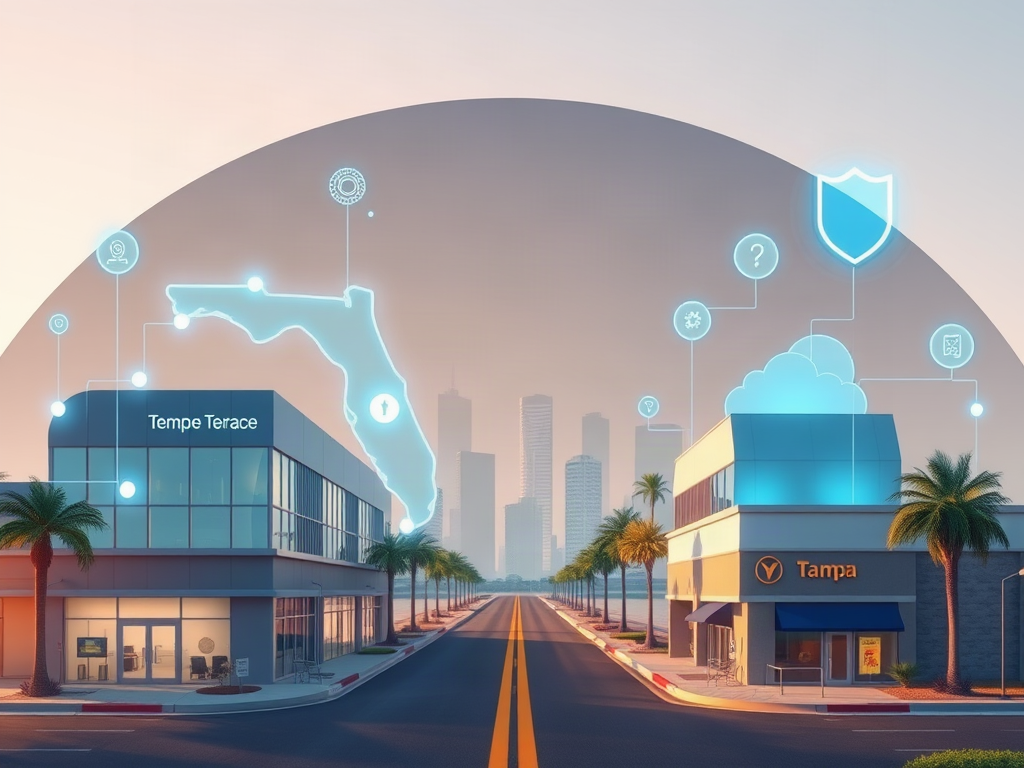
IT Support in Temple Terrace and Thonotosassa for Tampa Businesses in 2026
The Tampa Bay business landscape is evolving faster than ever. As we move deeper into 2026, companies in Temple Terrace and Thonotosassa are discovering that reliable technology is no longer a back-office concern—it is the engine that drives growth, security, and customer trust. Whether you operate a medical practice near the university corridor, a law office serving clients across Hillsborough County, or a growing corporate office along the I-4 corridor, dependable IT support has become a strategic necessity.
This guide explores what businesses in these two communities need to know about IT support in 2026, from cybersecurity and cloud infrastructure to communications and disaster recovery. It is written for decision-makers who want to understand the technology landscape clearly and make informed choices about how to protect and grow their organizations.
Why Temple Terrace and Thonotosassa Businesses Face Unique IT Challenges
Temple Terrace and Thonotosassa occupy an interesting position within the Tampa Bay region. Temple Terrace blends residential neighborhoods, educational institutions, and professional offices, while Thonotosassa remains a more dispersed, growing community with small businesses, agricultural operations, and service providers scattered across a wider geographic footprint.
That geography matters. Businesses in these areas often deal with connectivity inconsistencies, distributed workforces, and a need for responsive support that does not require waiting days for an on-site visit. In 2026, the most effective IT support providers are those who understand these local realities and can deliver both remote responsiveness and on-site expertise when it counts.
Common Technology Pain Points in These Communities
- Inconsistent network performance across older buildings and newly renovated office spaces
- Limited internal IT staffing, leaving business owners to manage technology themselves
- Growing cybersecurity exposure as more operations move online
- Aging phone systems that no longer meet the needs of hybrid teams
- Uncertainty about cloud migration and how to do it without disruption
- Inadequate backup strategies that leave data vulnerable to outages or ransomware
Each of these challenges is solvable, but only with a deliberate approach. That is where professional IT support becomes valuable—not as a reactive repair service, but as an ongoing partnership that anticipates problems before they disrupt operations.
The 2026 Cybersecurity Reality for Local Businesses
Cybersecurity has moved from a specialized concern to a baseline requirement. In 2026, threats are more automated, more targeted, and more financially damaging than at any point in the past. Small and mid-sized businesses are frequently chosen as targets precisely because attackers assume they lack robust defenses.
For businesses in Temple Terrace and Thonotosassa, the risks are concrete: a compromised email account can lead to fraudulent invoices, a ransomware event can halt operations for days, and a data breach can trigger regulatory penalties and reputational harm that takes years to recover from.
Essential Security Layers Every Business Needs
Effective cybersecurity is not a single product—it is a layered strategy. A comprehensive cybersecurity program typically includes:
- Endpoint protection across every workstation, laptop, and mobile device
- Email security and phishing defense to intercept malicious messages before they reach employees
- Multi-factor authentication on all business-critical accounts
- Network monitoring to detect unusual activity in real time
- Patch management to close vulnerabilities before they are exploited
- Security awareness training so employees recognize and report threats
- Incident response planning so your team knows exactly what to do if something goes wrong
Businesses in regulated industries face additional requirements. Medical offices must address patient data protections, law offices must safeguard client confidentiality, and financial services firms must meet strict compliance standards. Working with a provider that understands industry-specific requirements makes compliance far more manageable.
Cloud Services and Hybrid Work in 2026
Cloud adoption has matured. Most businesses now operate in hybrid environments, combining on-premises infrastructure with cloud-based applications and storage. The question in 2026 is not whether to use the cloud, but how to use it securely, efficiently, and in a way that supports your specific workflows.
For businesses in Temple Terrace, cloud services enable employees to work from home, from client sites, and from the office without friction. For businesses in Thonotosassa, where teams may be more dispersed, cloud infrastructure provides the consistency that physical networks alone cannot deliver.
What a Modern Cloud Strategy Includes
- Secure file sharing and collaboration platforms
- Cloud-hosted email and productivity suites
- Virtual desktops for remote and hybrid workers
- Cloud-based backup and redundancy
- Identity and access management across all systems
- Integration between cloud applications and on-premises systems
Professional cloud services support ensures that migration happens thoughtfully, with minimal downtime and proper security controls from day one. A poorly planned cloud migration can create data silos, expose sensitive information, and frustrate employees. A well-planned one makes the entire organization more agile.
Business Communications: Phones, VoIP, and Beyond
Communication technology has advanced considerably, and businesses that still rely on outdated phone systems are feeling the limitations. In 2026, modern communications platforms integrate voice, video, messaging, and collaboration into a single cohesive experience.
For many businesses, a cloud PBX system offers the flexibility that traditional phone systems cannot. Cloud-based phone systems support remote workers, scale easily as teams grow, and integrate with CRM and productivity tools. For organizations not ready for a full cloud transition, on-premises phone systems remain a viable and reliable option when properly maintained.
Communications Considerations for Growing Businesses
- Does your phone system support remote and hybrid employees?
- Can you easily add or remove lines as staffing changes?
- Are calls, voicemails, and messages integrated with your other business tools?
- Is your voice traffic secure and properly prioritized on your network?
- Do you have redundancy in place if your internet connection fails?
Businesses with high call volumes—such as call centers, medical offices, and professional service firms—benefit enormously from well-designed data and voice VoIP infrastructure. SIP trunking can further optimize costs and flexibility for organizations with substantial voice requirements.
Foundational to all of this is proper voice and data cabling. Even the most advanced cloud platform performs poorly over inadequate physical infrastructure. Structured cabling done correctly ensures that every device, phone, and access point operates at peak performance.
Data Backup and Disaster Recovery: The Safety Net
Every business generates and depends on data. Losing access to that data—even temporarily—can be catastrophic. In 2026, effective data backup and recovery is not optional; it is the foundation of business continuity.
Backup strategies have evolved beyond simple nightly copies. Modern approaches include continuous backup, immutable snapshots that resist ransomware encryption, geographic redundancy, and regularly tested recovery procedures. The goal is not just to back up data, but to ensure that when disaster strikes, recovery happens quickly and completely.
Questions to Ask About Your Backup Strategy
- How frequently is your data backed up, and how much data could you afford to lose?
- Are backups stored in multiple locations, including off-site or cloud environments?
- Have you tested a full recovery recently?
- Are backups protected against ransomware and insider threats?
- Does your recovery plan account for lost hardware, not just lost data?
Businesses that answer these questions confidently are in a strong position. Those that cannot are exposed to risks that are entirely preventable. A managed IT provider can assess your current backup posture and implement a strategy that matches your recovery time and recovery point objectives.
Physical Security and Video Surveillance
Technology support extends beyond networks and software. Physical security is increasingly integrated with IT infrastructure. Modern video surveillance systems are networked, cloud-connected, and remotely accessible—providing business owners with visibility into their facilities from anywhere.
For retail locations, medical offices, and businesses with valuable equipment or inventory in Temple Terrace and Thonotosassa, integrated surveillance systems offer both deterrence and accountability. When designed and maintained properly, they become a seamless part of your overall security and IT ecosystem.
Managed IT Services vs. Reactive Support: Understanding the Difference
Many businesses historically relied on reactive support—calling someone when something breaks. In 2026, that model is increasingly inadequate. The complexity of modern environments, combined with the speed of threats, demands proactive management.
Managed IT services provide continuous monitoring, maintenance, and strategic guidance. Instead of waiting for failures, managed providers prevent them. This approach reduces downtime, extends hardware lifespan, improves security, and frees business owners to focus on their actual work.
What Proactive IT Management Typically Includes
- 24/7 monitoring of networks, servers, and endpoints
- Automated patch management and updates
- Preventive maintenance and hardware lifecycle planning
- Help desk support for employees
- Strategic technology planning and budgeting guidance
- Vendor management and procurement support
- Regular reporting and review meetings
For businesses with limited or no internal IT staff, managed services function as an outsourced IT department. For businesses with internal IT teams, managed services often complement and extend in-house capabilities, filling gaps in specialized areas such as security or cloud architecture.
Industry-Specific IT Needs in the Temple Terrace and Thonotosassa Area
Different industries have different priorities. A one-size-fits-all approach to IT support rarely serves anyone well. Understanding the specific needs of your industry helps ensure that technology investments deliver real value.
Medical Offices
Medical practices must protect patient information, comply with healthcare regulations, and maintain reliable access to electronic health records. Any downtime directly impacts patient care. IT support for medical offices prioritizes security, uptime, and compliance.
Law Offices
Law firms handle sensitive client communications and confidential documents. Secure email, encrypted storage, and reliable document management systems are essential. IT support for law offices addresses both confidentiality and productivity.
Banking and Finance
Financial services firms face some of the most stringent regulatory requirements in any industry. Robust security controls, audit trails, and disaster recovery capabilities are non-negotiable. IT support for banking and finance focuses on regulatory adherence and risk mitigation.
Corporate Offices
Corporate offices need dependable productivity tools, collaboration platforms, and network infrastructure. IT support for corporate offices ensures employees have the tools they need without interruption.
Call Centers and Help Desks
Operations with high call volumes depend on uninterrupted voice infrastructure. IT support for call centers and help desks prioritizes reliability, call quality, and integration with customer management systems.
Restaurants and Food Trucks
Hospitality businesses require point-of-sale reliability, secure payment processing, and often networked surveillance. IT support for restaurants and food trucks focuses on the systems that keep service running smoothly.
Home Offices and Remote Workers
Remote work is permanent for many organizations. IT support for home offices and remote workers ensures that distributed teams have secure, reliable access to the systems they need.
Choosing the Right IT Partner for Your Business
Selecting an IT support provider is a significant decision. The right partner becomes an extension of your team, understands your business goals, and helps you make technology decisions with confidence. The wrong partner creates frustration, delays, and unnecessary costs.
What to Look For in an IT Support Provider
- Local presence and responsiveness: A provider who understands the Tampa Bay area and can respond quickly when on-site support is needed
- Breadth of expertise: Coverage across cybersecurity, cloud, communications, backup, and infrastructure
- Proactive approach: A focus on prevention and planning rather than only reacting to problems
- Clear communication: Regular reporting, accessible support, and plain-language explanations
- Industry experience: Familiarity with the compliance and operational needs of your specific industry
- Scalability: Solutions that can grow with your business as needs change
It is also worth asking about response times, escalation procedures, onboarding processes, and how the provider handles strategic planning. The strongest IT partnerships are built on transparency and mutual accountability.
Building a Technology Roadmap for 2026 and Beyond
Technology planning should not happen in isolation. The most successful businesses align their IT investments with their broader strategic goals. Are you planning to add staff? Open a new location? Expand into new service areas? Each of these decisions has technology implications that are best addressed proactively.
A technology roadmap typically covers a twelve- to thirty-six-month horizon, outlining planned upgrades, security improvements, and infrastructure changes. It gives leadership a clear picture of upcoming investments and helps avoid the emergency spending that comes from unplanned failures.
Elements of a Strong Technology Roadmap
- Current state assessment of hardware, software, and network infrastructure
- Security posture review with prioritized remediation steps
- Cloud adoption and optimization plan
- Communications upgrade timeline
- Backup and disaster recovery validation schedule
- Budget forecasting for capital and operational expenses
- Success metrics and review cadence
Businesses in Temple Terrace and Thonotosassa benefit from working with providers who serve the broader Tampa Bay region and understand local infrastructure, connectivity options, and business dynamics. A partner with deep regional experience can offer practical guidance that generic national providers simply cannot.
Preparing for the Unexpected: Business Continuity in 2026
Business continuity planning has become more important as operations have grown more dependent on technology. Whether the disruption is a cyberattack, a natural disaster, a power outage, or a failed server, having a plan in place makes the difference between a brief interruption and a prolonged crisis.
Continuity planning addresses questions such as: Where will employees work if the office is unavailable? How will customers reach you if phone systems are down? How quickly can critical systems be restored? Who has authority to make decisions during a crisis?
Regular testing of continuity plans is essential. A plan that exists only on paper is far less valuable than one that has been exercised and refined. Providers who offer comprehensive services across backup, communications, and infrastructure are well-positioned to help businesses build and maintain resilient operations.
The Value of Local Expertise in the Tampa Bay Market
Tampa Bay is a dynamic and growing region. Businesses here benefit from a strong economy, a talented workforce, and a supportive business community. They also face competition, rising real estate costs, and the constant pressure to operate more efficiently.
Local IT providers bring contextual knowledge that remote or national providers often lack. They understand local internet service options, can respond quickly when on-site support is needed, and often have relationships with vendors and contractors that accelerate problem resolution.
Businesses exploring service options in nearby areas can review the broader service areas to understand coverage. For those specifically in this region, dedicated managed IT support in Temple Terrace and managed IT support in Thonotosassa are available, along with support for surrounding communities such as Lutz, Riverview, and Brandon.
Frequently Asked Questions
How often should a business review its IT systems?
A formal review at least quarterly is recommended, with more frequent monitoring and reporting as part of an ongoing managed services relationship. Annual strategic planning sessions help align technology investments with business goals.
What is the biggest technology risk for small businesses in 2026?
Cybersecurity remains the top concern. Ransomware, phishing, and business email compromise continue to target organizations of all sizes. Layered security controls, employee training, and tested backups are the most effective defenses.
Can a business move to the cloud without disrupting operations?
Yes, when migration is planned and executed carefully. Phased approaches, thorough testing, and clear communication minimize disruption. Professional guidance is valuable to avoid common pitfalls.
How do I know if my current backup strategy is sufficient?
The clearest test is to attempt a recovery. If you can restore critical data and systems quickly and completely, your strategy is likely sound. If not, it needs improvement.
What should I expect from an IT support provider?
Expect proactive monitoring, responsive help desk support, clear reporting, strategic guidance, and accountability for outcomes. Your provider should feel like a partner invested in your success, not just a vendor responding to tickets.
Moving Forward with Confidence
Technology will continue to evolve, and businesses that treat IT as a strategic asset will consistently outperform those that treat it as an afterthought. The good news is that expert support is available locally, and businesses in Temple Terrace and Thonotosassa do not need to navigate these complexities alone.
From cybersecurity and cloud services to communications, cabling, and disaster recovery, a comprehensive approach to IT support protects your organization, empowers your team, and positions your business for growth in 2026 and beyond.
If your business is looking for a dependable managed IT services and IT support provider in the Tampa Bay area, TeamLogic IT Tampa is ready to help. Visit https://www.tampatechsupportfl.com to learn more, explore managed IT services and IT support options, or contact the team to start a conversation about your technology goals for 2026.