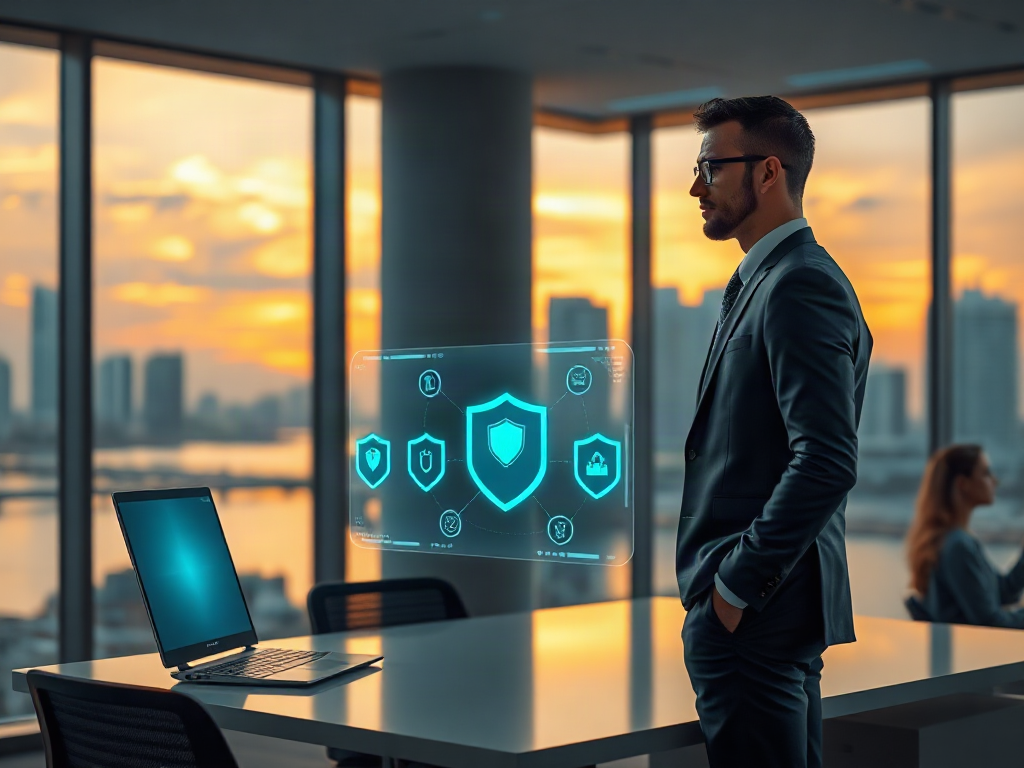
IT Support in South Tampa for Growing Corporate Offices in 2026
South Tampa has become one of the most dynamic business corridors in the Tampa Bay region. From the high-rises overlooking Bayshore Boulevard to the professional suites lining Westshore and Kennedy Boulevard, corporate offices in this area are expanding at a steady pace. With that growth comes a challenge that many business leaders underestimate until it is too late: the technology foundation that supports daily operations must scale just as quickly as the headcount. In 2026, IT support for South Tampa corporate offices is no longer a background utility. It is a strategic function that determines whether a growing company can hire efficiently, serve clients reliably, and protect sensitive information.
This article explores what growing corporate offices in South Tampa should expect from IT support in 2026, why the old approach to technology management no longer works, and how a proactive, security-focused partnership can keep a business moving forward without constant disruption. For organizations that are scaling quickly, IT support in South Tampa has become a foundational investment rather than an afterthought.
Why South Tampa Corporate Offices Are Growing So Quickly
South Tampa offers a rare combination that appeals to expanding companies. It sits close to downtown Tampa, Tampa International Airport, and the Westshore business district. It provides access to an educated workforce, a strong network of professional service firms, and a quality of life that helps attract talent. Industries such as finance, law, healthcare administration, real estate, consulting, and technology services have all established a meaningful presence in the area.
This growth creates a specific set of technology pressures. When a corporate office adds ten or twenty employees in a year, the demands on its network, cybersecurity posture, communication systems, and data storage grow exponentially. What worked for a team of fifteen rarely works for a team of fifty. The companies that thrive are the ones that plan for that transition before it creates friction.
What "IT Support" Actually Means for a Growing Office in 2026
The phrase "IT support" often conjures an image of someone who shows up when a computer stops working. That definition is outdated. For a growing corporate office in South Tampa, IT support in 2026 encompasses a much broader set of responsibilities:
- Continuous monitoring of networks, servers, and endpoints to catch problems before users notice them
- Cybersecurity controls that protect against ransomware, phishing, and credential theft
- Cloud and hybrid infrastructure management that keeps applications accessible and performant
- Voice and communication systems that support both in-office and remote staff
- Data backup and recovery that guarantees business continuity after an incident
- Strategic guidance on technology spending, vendor selection, and compliance
In other words, modern managed IT services function as an extension of the leadership team, not just a help desk. That distinction matters enormously for a corporate office that is trying to grow without adding internal IT headcount.
The Hidden Costs of Reactive Technology Management
Many growing offices fall into a pattern that feels efficient on the surface. They rely on a single internal technician or an on-call provider who responds when something breaks. This "break-fix" model appears economical because it only generates a cost when there is a problem. In reality, it produces several hidden expenses that compound as the business grows.
Consider what happens when a growing office experiences an unplanned outage during a client presentation or a payroll cycle. The direct cost includes lost productivity across every employee affected. The indirect cost includes damaged client confidence, missed deadlines, and the scramble to recover data. Over time, these events erode the operational stability that a growing company depends on.
Reactive support also creates a leadership burden. Executives and office managers end up making technology decisions without a clear framework, often under pressure. Proactive IT support reverses this dynamic by putting a plan in place before problems occur.
Cybersecurity Is Now a Board-Level Concern
Corporate offices in South Tampa handle a significant amount of sensitive information. Financial records, legal documents, client contracts, employee data, and healthcare information all flow through these environments. In 2026, cybercriminals are more organized and better funded than ever, and small and mid-sized offices are frequently targeted precisely because they are perceived as easier to breach.
A serious cybersecurity program for a growing corporate office includes several layers working together:
- Endpoint protection and advanced threat detection across every device
- Email security that filters phishing attempts and malicious attachments
- Multi-factor authentication enforced consistently across all accounts
- Network segmentation to limit how far an intruder can move after entry
- Security awareness training so employees recognize manipulation attempts
- Regular vulnerability assessments and patching cycles
Building and maintaining these layers requires specialized expertise. That is why many growing offices turn to a dedicated cybersecurity provider rather than trying to manage it internally. For industries with strict regulatory requirements, such as banking and finance or law offices, this expertise is not optional.
Cloud and Hybrid Environments: The New Default
Ten years ago, most corporate offices debated whether to move applications to the cloud. In 2026, that debate is largely over. The question now is how to manage a hybrid environment where some workloads live in the cloud, some remain on-premises, and employees expect seamless access from anywhere.
Growing offices in South Tampa increasingly rely on cloud services for email, file storage, collaboration, and line-of-business applications. This approach offers flexibility and scalability, but it also introduces complexity. Identity management, access controls, data governance, and integration between cloud and local systems all require careful configuration.
Ideally, the office has a strategy in place before new cloud applications are introduced. A coordinated approach ensures that the identities of all users are managed consistently, compliance requirements are respected, and performance remains strong regardless of where staff are working.
Communication Systems That Keep Pace With Growth
When a corporate office adds people, it also adds phone lines, extensions, conference capabilities, and collaboration tools. Traditional on-premises phone systems can become costly and rigid as a company expands. Modern cloud PBX solutions offer flexibility that aligns with growth, allowing new users to be added quickly and enabling staff to make and receive calls from any location.
Many South Tampa offices operate a hybrid model that combines on-premises phone systems with cloud-based capabilities. SIP trunking and unified voice and data infrastructure allow voice traffic to travel efficiently over the same network as data, reducing complexity and improving reliability.
The right communications architecture depends on the specific needs of the office. A client-facing firm may prioritize call quality and recording. A professional services office may emphasize integration with CRM or case management software. Regardless of the scenario, the system should be designed to expand without requiring a complete overhaul every few years.
Data Backup and Business Continuity
Every growing corporate office eventually confronts the same question: what would happen if critical data disappeared? Ransomware, hardware failure, accidental deletion, and natural events all represent real risks. A robust data backup and recovery strategy ensures that the answer to that question is not a catastrophe.
An effective strategy in 2026 follows the principle of multiple copies in multiple locations, with regular testing to confirm that recovery actually works. Backups that are never tested are little more than a comforting assumption.
Business continuity planning goes beyond backups. It addresses how the office will function if a primary location becomes unavailable, how staff will access systems remotely, and how communication will continue during a disruption. For corporate offices with client-facing obligations, these plans protect revenue as much as they protect data.
Physical Infrastructure Still Matters
Even in a cloud-centric world, the physical layer of an office network remains important. Voice and data cabling determines how reliably devices connect. Poorly planned cabling creates bottlenecks, limits future expansion, and makes troubleshooting harder. Offices that are growing should consider structured cabling designed to support higher bandwidth and additional devices.
Physical security is part of the same conversation. Video surveillance systems help protect assets, support workplace safety, and provide documentation when incidents occur. Integrating surveillance with the broader network allows for centralized monitoring and simpler management.
Supporting Remote and Hybrid Staff
South Tampa corporate offices increasingly operate with a mix of in-office and remote staff. Supporting this model requires more than handing out laptops. It requires secure access to internal resources, consistent user experiences regardless of location, and policies that protect data even when devices leave the building.
The needs of remote workers and home offices differ from those of a traditional corporate environment. A capable IT partner understands these differences and designs solutions that keep remote team members productive without compromising security.
Industry-Specific Considerations for South Tampa Offices
Different industries face different technology challenges. A growing office in one sector may prioritize compliance, while another focuses on uptime or communication quality. Understanding these nuances helps shape an IT strategy that fits the business.
- Corporate offices generally need scalable infrastructure, reliable communication tools, and strong security controls.
- Medical offices must address patient data privacy requirements alongside clinical system reliability.
- Call centers and help desks depend on high-availability voice systems and efficient network performance.
- Restaurants and food service operations require secure point-of-sale networks and dependable connectivity.
Exploring industry-specific IT solutions helps leadership teams ask the right questions and avoid one-size-fits-all approaches.
What to Look for in an IT Support Partner in 2026
Not all IT providers are built the same. For a growing corporate office, the right partner should demonstrate several key characteristics.
Local presence and fast response. Technology problems do not wait for a convenient moment. A provider with a local team can respond quickly and understand the specific context of the Tampa Bay business environment. Offices in neighborhoods such as Westshore, Downtown Tampa, Hyde Park, and Westchase all benefit from having support nearby.
Proactive monitoring and maintenance. The best problems are the ones that never reach users. Proactive monitoring identifies issues early and resolves them before they cause downtime.
Security-first mindset. Every recommendation should consider security implications. A provider that treats cybersecurity as a bolt-on feature rather than a foundation is a liability.
Scalability. The solutions implemented today should support the office three years from now. This means choosing platforms and architectures that can grow without forcing disruptive changes.
Clear communication. Technology decisions should be explained in plain language, with clear reasoning and documented plans. Leadership teams should never feel they are being kept in the dark about their own infrastructure.
Questions Growing Offices Should Ask Before Choosing a Provider
- How quickly can the provider respond to a critical issue during business hours and after hours?
- What monitoring tools are used, and how are alerts handled?
- How is cybersecurity addressed beyond basic antivirus software?
- What does onboarding look like, and how long does it take to stabilize an environment?
- How are backups tested, and what is the expected recovery time after an incident?
- Can the provider support both cloud and on-premises systems?
- What experience does the provider have with similar offices in the Tampa Bay area?
Thoughtful answers to these questions reveal whether a provider is truly prepared to support a growing organization.
The Strategic Value of Proactive IT Support
Ultimately, IT support for a growing corporate office is about enabling the business to focus on its core mission. When technology works reliably, security threats are managed, and systems scale with demand, leadership can concentrate on clients, hiring, and growth rather than firefighting.
In 2026, the offices that succeed in South Tampa will be those that treat technology as a strategic asset. They will invest in proactive support, robust cybersecurity, and infrastructure that anticipates growth rather than reacting to it. They will work with partners who understand the local business landscape and bring specialized expertise to every layer of the technology stack.
The Tampa Bay region offers a strong and growing market for IT services, with support available across Tampa, Brandon, Clearwater, St. Petersburg, and surrounding communities. Growing offices in South Tampa are well positioned to take advantage of that ecosystem, provided they choose the right partner.
For organizations that want to learn more about how managed IT services support growth, resources such as the TeamLogic IT Tampa blog offer practical guidance on topics ranging from cloud services for Tampa businesses to data backup and recovery strategies and managed IT versus break-fix support. Additional insights are available on structured cabling best practices, law office IT security, and medical office cybersecurity and compliance.
Building a Technology Foundation for the Next Stage of Growth
A growing corporate office in South Tampa faces a moment of decision. It can continue managing technology reactively, hoping that nothing serious goes wrong, or it can build a foundation that supports the next stage of growth with confidence. The first approach may feel simpler in the short term. The second approach protects the business over the long term.
That foundation includes proactive monitoring, layered cybersecurity, scalable cloud and communications infrastructure, tested backup and recovery, and physical systems that support rather than constrain expansion. It also includes a partner who understands the local market, responds quickly when needed, and brings expertise across every layer of the technology stack.
TeamLogic IT Tampa works with businesses across the region, including corporate offices in South Tampa and nearby communities such as Carrollwood, Citrus Park, Lutz, Riverview, Valrico, and Ybor City. The team provides expertise in IT infrastructure, cybersecurity, cloud environments, business communications, and continuity planning, helping offices grow without the technology headaches that often accompany expansion. More information about the company is available on the about page and through additional resources.
If your South Tampa corporate office is preparing for growth in 2026 and beyond, now is the time to evaluate whether your current IT support can carry the load. A conversation with a knowledgeable partner can reveal gaps before they become problems and lay the groundwork for a technology environment that supports every stage of your expansion.
Contact TeamLogic IT Tampa today to discuss managed IT services and IT support for your growing corporate office. Visit https://www.tampatechsupportfl.com to get started.